
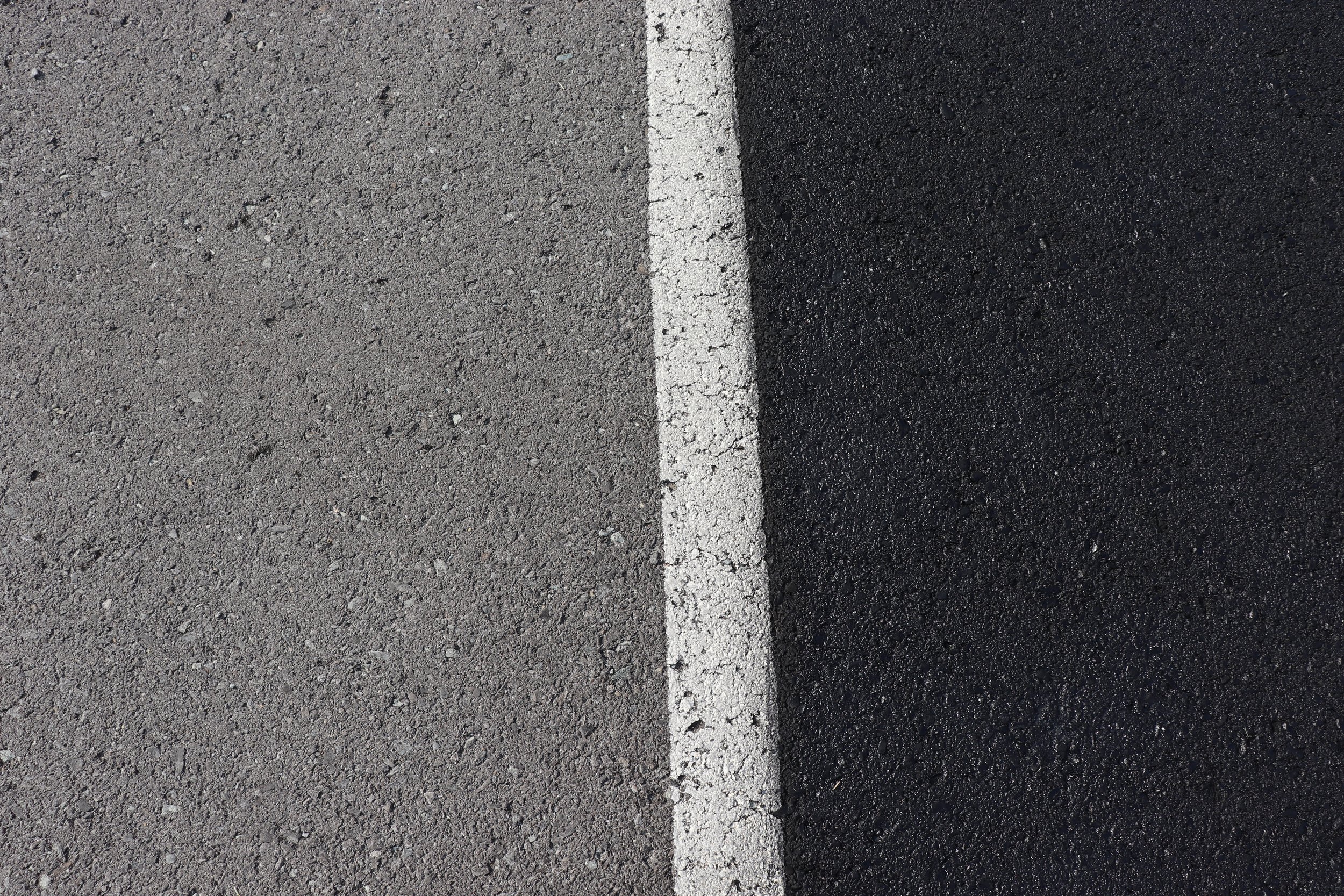
BioBlack AR heals it. Sealcoat covers it up.
Both promise a fresh black parking lot. Only one does anything about why your asphalt is aging in the first place. Here's what's actually happening below the surface, and why it decides how long your asphalt lasts.
BioBlack AR goes deep to help asphalt last longer.
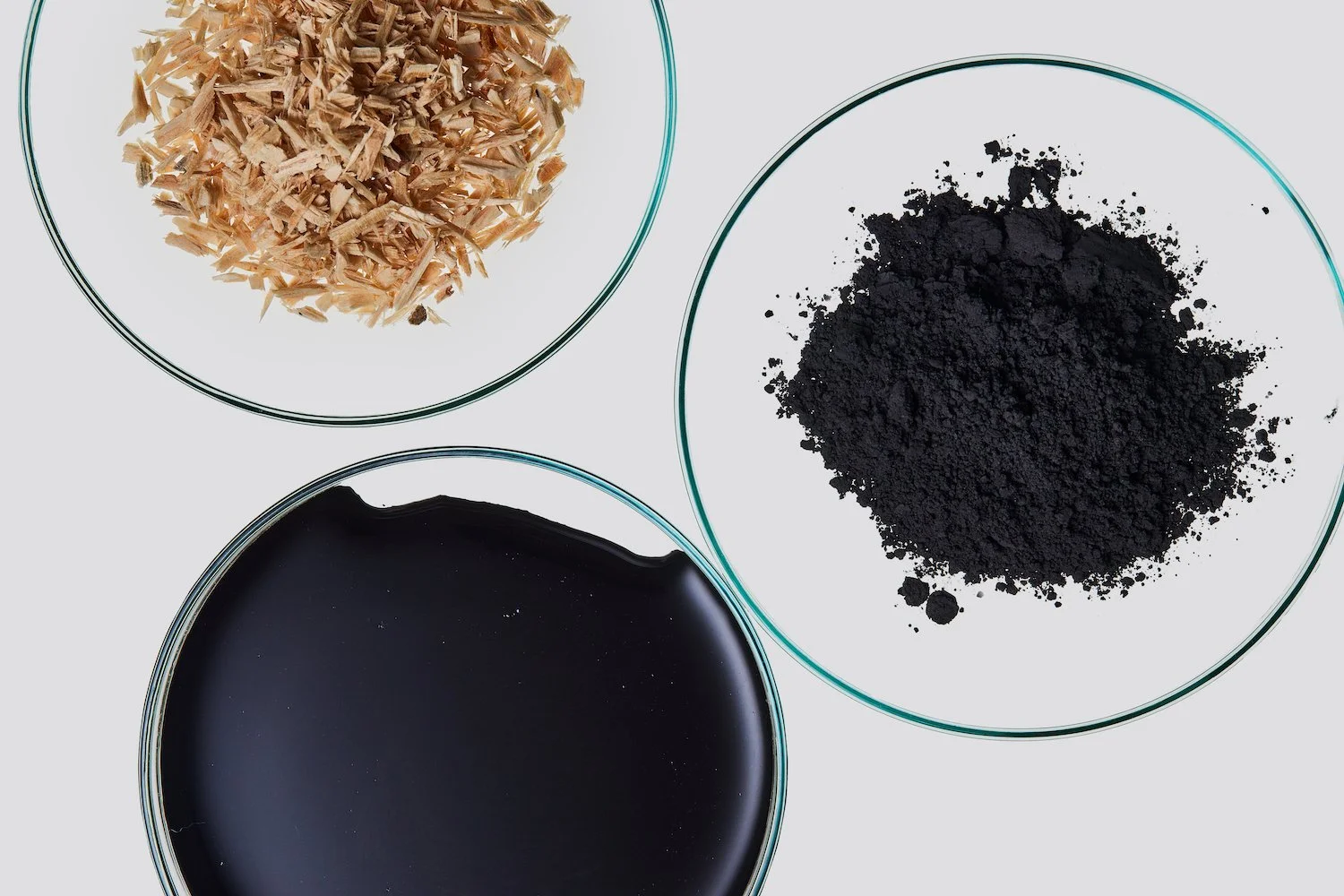
BioBlack AR is a bio-based rejuvenator that penetrates deep into aging asphalt and restores the compounds that keep asphalt flexible. By mimicking the binder's molecular structure, it reverses aging, and helps prevent the cracking and potholes that follow.
Where most rejuvenators stop at restoring the binder, BioBlack AR also locks in a durable black finish with Nature Coatings’ BioBlack pigment.
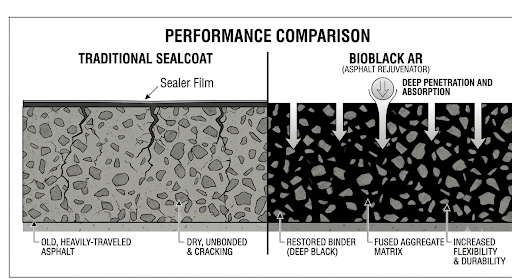
BioBlack AR vs. Sealcoats
Subscribe for the latest insights on the differences between sealcoats and BioBlack AR.
BioBlack AR vs. Sealcoat
| Factor | BioBlack AR | Sealcoat |
|---|---|---|
| How it works | Penetrates into asphalt binder | Sits on top (film layer) |
| Primary function | UV + water barrier + restores oils + flexibility | UV + water barrier |
| Effect depth | Surface + near-surface binder 3/8" | Surface only |
| Coats | 1 | 2 |
| Reapplication | 3 years | Every 2–3 years |
| Visual look | Penetrating deep black, cosmetic improvement | Black, cosmetic improvement |
| Addresses cracking? | Helps slow cracks, restoring flexibility | Only minor surface cracks |
| Aging over time | More uniform gradual aging and does not flake off because it penetrates | Wears off in uneven patterns and flakes off |
Before you sealcoat again, see what rejuvenating would save.
BioBlack AR vs. Sealcoat: FAQ
-
Sealcoat is a coating. It sits on top of your asphalt as a thin film and wears off, which is why you recoat every couple of years. BioBlack AR penetrates the surface and restores the binder underneath, the part that's actually aging. One covers the problem, the other treats it. That's why BioBlack AR adds years of life while sealcoat just resets the clock on the look.
-
Per application, yes. But sealcoat only buys you a fresh coat of black for a couple of years before you pay again, while the asphalt underneath keeps aging. BioBlack AR costs more up front because it does more: it restores the asphalt and pushes out the big overlay bill, which is where the real money is. Over the life of the lot, treating the asphalt beats recoating it.
-
BioBlack AR isn't a crack filler, and neither is sealcoat. What it does is restore the flexibility that keeps new cracks from forming, by replenishing the oils that have dried out of the binder. On asphalt that's aged but still sound, that means slower cracking and raveling over time. Existing structural cracks should still be addressed before treatment.
-
In most cases, yes, though timing and surface condition matter. BioBlack AR works by penetrating into the asphalt, so the right approach depends on what's on your lot now and how the asphalt underneath is holding up. Tell us about your lot and we'll help you map the best path.
-
The sweet spot is asphalt that's aged but still structurally sound, graying and drying out but not yet cracked and failing, often right when you'd otherwise schedule another sealcoat. Treat it then and BioBlack AR can add years of life. Wait until the asphalt is already breaking up, and no treatment, sealcoat or rejuvenator, can undo that.